Can I get Molluscum again?

ConzerolTeam Molluscum Transmition Leave a comment  

Future infections are possible. Recovering from Molluscum Contagiosum (MCV) does not make someone immune. Always be careful with skin to skin contact.

  • MCV does not remain dormant in the body. If someone develops MCV lesions for a second time, they have come in contact with the virus (via person or object) anew.
  • The lesions develop 2-8 weeks after being infected with the virus. Individual lesions generally last up to 2 months.
  • Newer lesions develop as previous ones resolve, as the virus spreads from one part of the skin to another.
  • Without treatment pustules appear and resolve over several months until full resolution from the infection. The infection can last for 2 years with rare cases lasting up to 5 years.
  • The main concerns for Molluscum Contagiosum (MCV)are the cosmetic appearance and the fear of transmitting MCV to others.
  • Scratched or mistreated MCV lesions could develop secondary infections, requiring to be treated with topical antibiotics.

Try to contain Molluscum Contagiosum (MCV). Someone else may become infected by contaminated objects (fomites) such as towels, soft toys, shaving equipment, tattoo equipment, electrolysis tools, sponges, bathing scrubs, bed sheets and clothing. The virus can also traverse from one part of the body to another (auto-inoculation or self-reinfection) simply by touching a lesion then touching another area of one´s own skin. A person with MCV is contagious until the last lesion resolves.

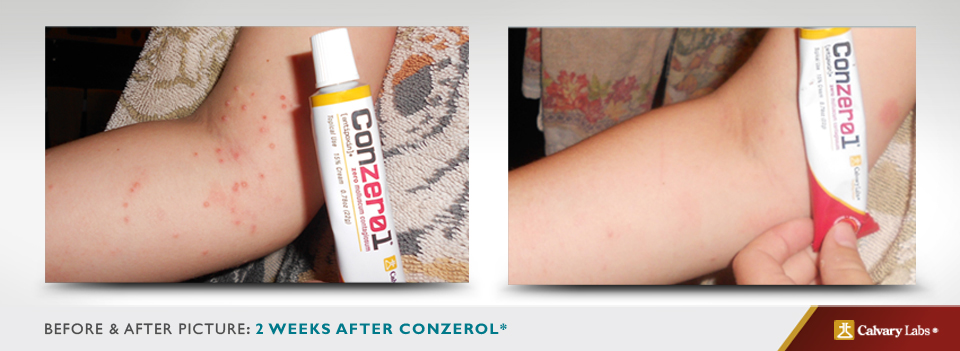
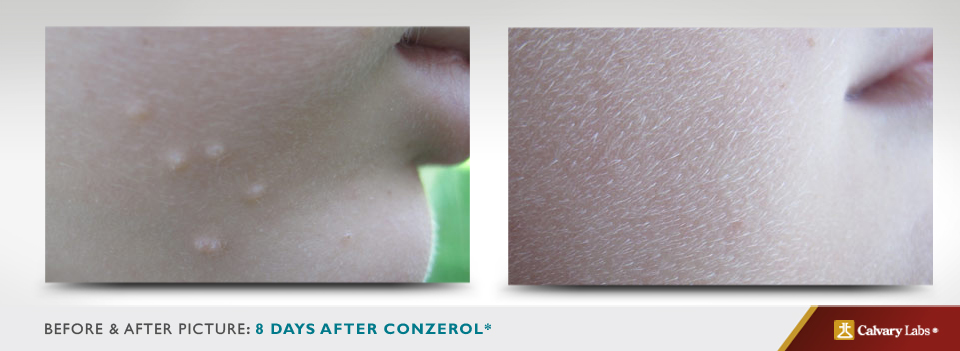
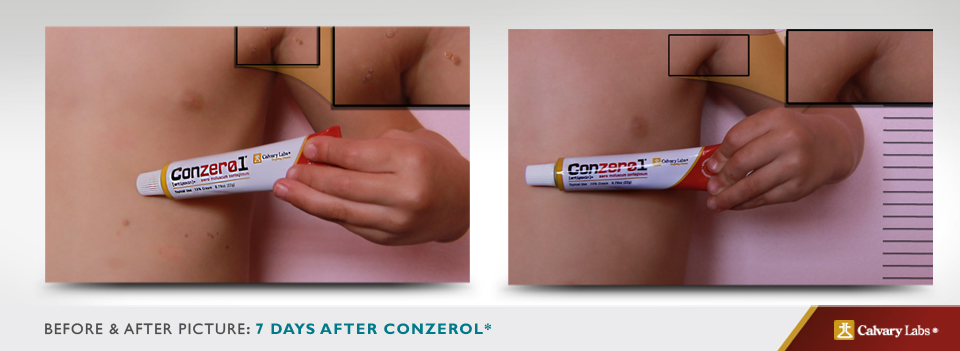
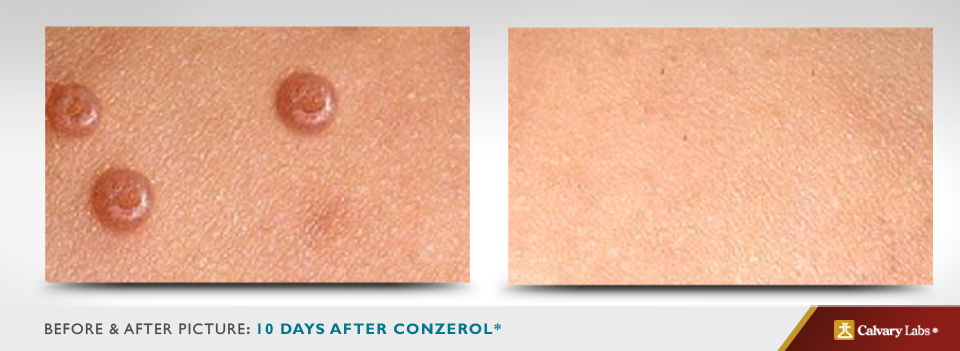
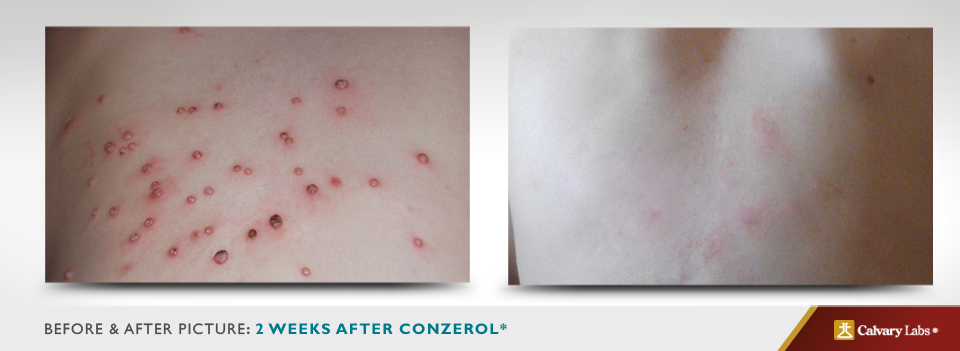
Conzerol heals Molluscum Contagiosum (MCV) lesions and reduces further spreading. With Conzerol an infected person, child or adult, can be back to normal fast, instead of months with traditional invasive and painful alternatives.



Alternative Molluscum Contagiosum treatments

ConzerolTeam About Molluscum Leave a comment  


Keep in mind that individuals with a healthy immune system usually spontaneously resolve (clear) in 1 to-2 years, while immune-compromised persons may take much longer and have more severe cases.
Alternative treatments include:

  • Curettage- Scraping off the lesion and inner waxy head. This procedure may be performed with or without an anesthetic. With children and infants, it may include harnessing to reduce struggling. Scar damage is likely to result of this alternative.
  • Cryosurgery- Freezing the lesion, surrounding tissue and inner viral-bed with liquid nitrogen. Scar damage is likely to result of this alternative.
  • Cantharidin- A cautious application of a blistering agent used to traumatize and kill the virus while affecting surrounding tissue. Scar damage is likely to result of this alternative.
  • Imiquimod- (Aldara)- an immune-modulating drug.
  • Tretinoin – (Retin-A) an acne treatment that has virtually no efficacy for molluscum patients.
  • Salicylic Acid- (Compound W) applied to pustules – no other available data
  • Laser- Destruction of the viral-bed and surrounding tissue with laser. Scarring may occur.
  • Tea Tree Oil- alleged to be effective for about 18% of users. No substantiated data available.
  • Colloidal Silver- no clinical data available
  • Duct Tape- no available data. Not sterile and may cause additional secondary infections.
  • Apple Cider Vinegar- no clinical data available.
  • Beatle Juice- no available data. We have received reports explaining how it caused the spread of the virus.
  • Curealls- Other products offered through the internet claiming miraculous results.

Scratched or mistreated Molluscum Contagiosum (MCV) lesions might develop secondary infections, requiring to be treated with topical antibiotics and extending the healing period.

Conzerol heals Molluscum Contagiosum (MCV) lesions and reduces further spreading. With Conzerol an infected person, child or adult, can be back to normal fast, instead of months with traditional invasive and painful alternatives.


« Previous  1 2 3